
Clear containment and airflow control
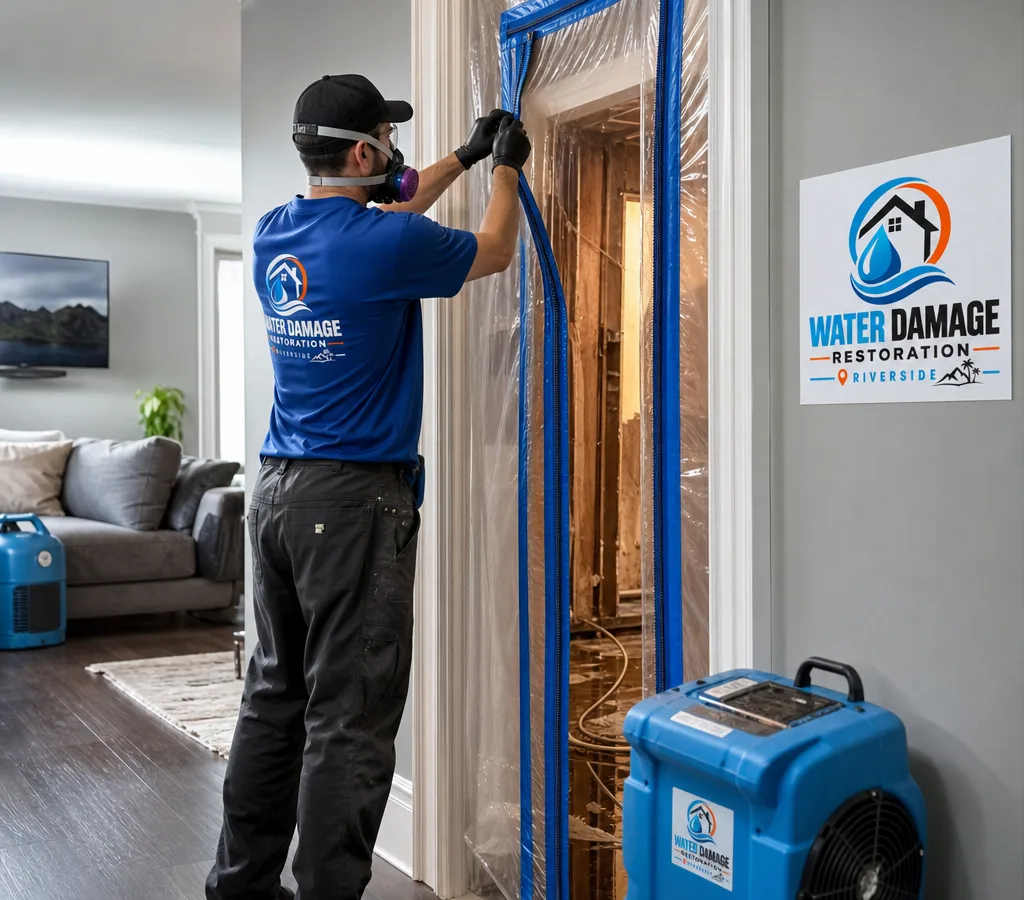
We isolate the affected area with plastic sheeting and use negative air when appropriate, so disturbed spores stay inside the workspace instead of migrating through your home or business.
Serving Riverside, California & surrounding areas
24/7 Emergency Response
Mold removal in Riverside, CA
If you smell a musty odor, see staining, or have had a leak, act fast. Our Riverside team inspects, contains the area, removes contaminated materials when needed, and cleans and treats surfaces to help get your indoor air back on track.
Source-first mold cleanup
Searching for mold removal Riverside CA usually means something has already tipped you off: a persistent musty smell, dark spotting on drywall, bubbling paint, damp carpet edges, or allergy symptoms that are worse indoors. In Riverside, mold problems often follow plumbing leaks, HVAC condensate issues, roof or window leaks, or a past water event that dried on the surface but stayed wet inside wall cavities.
Water Damage Restoration Riverside approaches Riverside mold removal the way it should be handled: confirm what is happening, isolate the work area, remove or clean what can be safely salvaged, and address the moisture that let mold grow in the first place. Cleaning visible staining without containment or without drying the hidden wet areas is a common reason the problem returns.
If your situation began with a leak or flooding, you may also want a coordinated plan for water damage restoration so drying, demo decisions, and mold remediation are not working against each other.
Professional remediation scope
We isolate the affected area with plastic sheeting and use negative air when appropriate, so disturbed spores stay inside the workspace instead of migrating through your home or business.
HEPA air scrubbers and HEPA vacuuming are used to capture fine particles, followed by damp-wiping and targeted antimicrobial treatment where it is appropriate for the surface.
Porous materials like drywall, insulation, carpet pad, and certain ceiling tiles often need controlled removal and disposal when growth has penetrated the material.
Moisture readings help confirm whether framing, subfloors, and wall cavities are dry enough to close up, reducing the chance of hidden regrowth.
You get a written scope that explains what is being removed, what is being cleaned, what stays, and what needs a separate trade—plumbing, roofing, or HVAC—to fix the water source.
Hidden moisture and growth
Mold does not need a big flood to take hold. A slow drip under a sink can feed growth behind a cabinet base. An HVAC drain line can back up and wet a closet wall. A bathroom fan that does not vent well can keep humidity high enough for repeated condensation.
In Riverside homes and small commercial spaces, we commonly find growth in:
Neighborhoods with a mix of older and newer construction can have very different risk points. In areas like Wood Streets and Downtown Riverside, older plumbing lines and original plaster or drywall assemblies can make leaks harder to spot early. In Canyon Crest and Alessandro Heights, multi-level layouts and complex rooflines can create longer paths for water to travel before it shows up. In Orangecrest and La Sierra, many homes include attached garages and interior laundry rooms where small supply-line leaks can stay out of view until staining appears.
If you are unsure whether what you see is limited to one spot or extends into cavities, an inspection with containment planning is the safest next step.
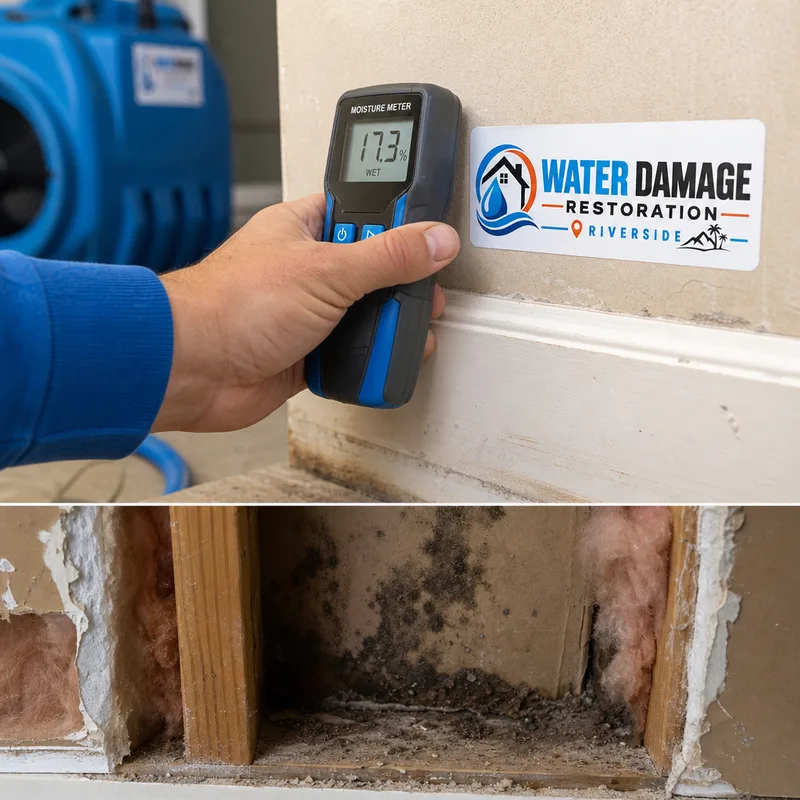
We look for the likely moisture source, check adjacent materials, and map the affected area so the scope matches what is actually wet or contaminated.
We protect floors and contents, build containment barriers, and establish controlled airflow when needed to keep debris and spores from spreading.
Unsavable porous materials are removed under containment. Remaining surfaces are HEPA vacuumed, cleaned, and treated based on the material type and condition.
If moisture is present, we set drying equipment and track progress with moisture readings. The goal is dry, stable materials before reconstruction or close-up work.
We detail-clean the area, remove containment, and outline what comes next. If a plumber, roofer, or HVAC technician is needed to correct the source, we will explain what to address.
Riverside mold removal pricing
Mold removal in Riverside typically ranges from about $900 to $3,500 for many residential jobs, while larger or more complex projects—multi-room, HVAC involvement, or heavy material removal—can run $4,000 to $10,000+.
Your final price depends on how far the affected area extends behind finishes, how much porous material must be removed, access such as tight crawl spaces or high ceilings, the level of containment needed, and whether drying equipment is required. The most accurate way to price Riverside mold removal is with an on-site inspection and a written scope before work starts.
If you need mold removal Riverside CA homeowners can trust, start with an inspection and a clear containment plan so you know what is being cleaned, what is being removed, and what has to be fixed to keep it from coming back.
Call for Emergency HelpPractical next steps
Start times depend on the size of the job and whether containment and drying are needed, but urgent situations are often scheduled quickly because ongoing moisture and disturbed mold can create more damage. If there has been a recent leak or overflow, it is smart to begin with an inspection as soon as possible so the scope matches the real wet area, not only what is visible.
Many projects can be completed while occupants remain on-site, as long as the affected area can be fully contained and there is a safe path of travel around the workspace. If growth is widespread, if sensitive occupants are present, or if the work impacts key rooms like a kitchen or primary bathroom, temporary relocation may be recommended during the heaviest removal and cleaning.
In many cases, remediation can proceed based on visible conditions and moisture evidence, since the practical steps—containment, removal or cleaning, and moisture correction—are driven by where the mold is and what materials are affected. If you need sampling for documentation, real estate, or a specific indoor air concern, we can discuss coordinating testing with an appropriate third-party provider so the scope stays objective.
Surface cleaning addresses growth on non-porous or semi-porous materials that can be cleaned and treated, while full remediation includes containment and the controlled removal of contaminated porous materials like drywall, insulation, and carpet pad. If mold is inside wall cavities or under flooring, cleaning what you can see will not resolve the underlying contamination or moisture pathway.
Drywall often needs to be removed when mold has penetrated the paper facing or when the gypsum core has stayed wet, because it is difficult to clean thoroughly and keep stable. In some limited cases where staining is superficial and the board is dry and structurally sound, targeted cleaning may be possible, but the decision should be based on inspection and moisture readings.
Yes. Even in a generally warm inland area, mold growth spikes when a building has trapped moisture from a leak, poor ventilation, or condensation, especially in closed-up rooms and wall cavities. The practical takeaway is that stopping the water source and confirming materials are actually dry is as important as the visible cleanup.
Yes. Commercial mold removal often requires tighter scheduling, clearer containment logistics around customers and staff, and documentation-friendly scopes for property management. If your business had an after-hours leak or recurring HVAC moisture, an inspection can identify what needs immediate containment and what can be staged to reduce downtime.
Tell us what you are seeing and where it is happening. We will recommend next steps, inspect the affected areas, and provide a written scope for mold removal in Riverside based on what the building actually needs.